

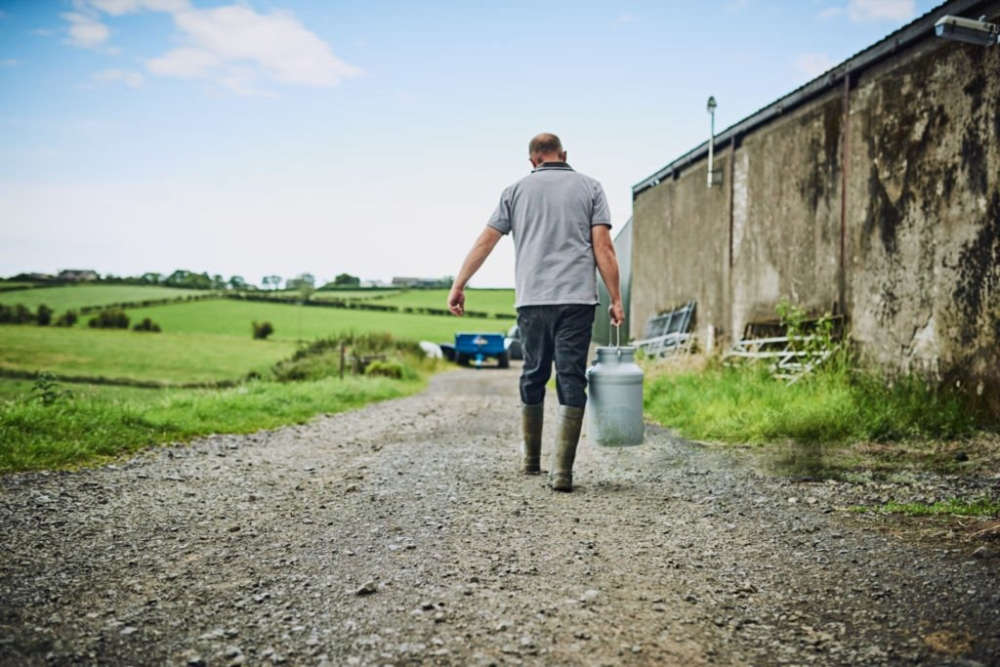
One in Three Farmers Plan to Leave Within Five Years, Survey Reveals
A survey by Agriland has exposed a crisis in Irish agriculture.
With income falling, land abandonment looming, and fewer young people entering the sector, farm experts warn of a rural cliff edge.
1 in 3 farmers say they intend to leave farming within the next five years, according to a new survey of approximately 2,300 Irish farmers commissioned by Agriland.
The findings paint a bleak picture for the future of Irish agriculture. Half of those planning to exit do not yet have a successor identified, while the survey also found that 80% of farmers expect their income to fall over the coming year—a scenario that farm leaders say is pushing experienced farmers into early retirement and deterring young people from entering the sector.
A Disaster on Every Front
Tom Byrne, Rural Development Chair for Wicklow IFA, described the implications as far-reaching and catastrophic. Speaking to the The Morning Show, he outlined the consequences of mass farm abandonment:
"It is a real on-the-ground problem, and it's going to be a disaster for food production, it'll be a disaster for the environment, and it'll be a disaster for the countryside. Farms will become much, much bigger, commercial, less environmentally friendly, the lesser lands, the poorer lands will be abandoned and that in itself is a real problem."
Byrne emphasized that land abandonment carries hidden environmental costs that conservation advocates often overlook. He pointed to northern Portugal as a cautionary tale, where decades of farm closure have led to massive wildfires and depopulation so severe that "they don't sell a house in those regions anymore, they sell entire villages."
"The Wicklow Hills here are beautiful, but if that land is not managed and fire load increases, there'll be a disaster someday. That will be a disaster for Ireland, it'll be a disaster for the environment."
Why Farmers Are Leaving
Key barriers to staying in farming:
-
Falling incomes and income volatility
-
Aging farmer population (average age 59)
-
Work-life balance expectations among younger generations
-
Rising costs of machinery and maintenance
-
Bureaucratic burden and environmental restrictions
-
Limited access to land for new entrants
The average age of Irish farmers now stands at 59. For those approaching retirement, a forecast of falling incomes makes the decision to exit straightforward. But the challenge runs deeper than economics alone.
Young, well-educated, and mobile—today's potential farmers have options their parents did not. And crucially, they are not willing to accept the traditional terms of farm life.
"Young people have such options now, well-educated, mobile young people, and they're not prepared to work 24, 7, 365. There's a work-lifestyle balance that they expect to have, and it's just not there in farming."
He also drew a parallel to teaching and nursing—sectors that have historically relied on calling and dedication to attract workers. "Very much the same applies to farming," he said. Yet unlike those professions, farming offers no stable income or regulated hours to compensate for the sacrifice.
The Income Crisis
The root cause, according to farm leaders, is straightforward: farmers are not earning enough to sustain a viable livelihood.
At a critical moment for Irish agriculture, the EU presidency brings negotiations over the Common Agricultural Policy (CAP) budget into sharp focus. Proposals on the table include a minimum cut of 24% to direct income payments to farmers, with some scenarios projecting cuts as high as 40%.
"For starters, the income has to rise. At the present time, Ireland has the presidency of the EU and the major concern is the negotiations on the CAP budget with a minimum cut of 24% direct income to farmers and a possible income cut of 40%. That's why people are saying we've had enough, we're out."
The gap between the cost of replacing and maintaining modern agricultural machinery and the income potential from farming has become unsustainable.
A Community Issue, Not a Public Opinion Problem
Byrne stressed that farmers do not suffer from a lack of public support. On the contrary, urban communities—particularly in Dublin—have repeatedly shown solidarity with farming interests. The issue is not social standing but economic viability.
"As a farmer, I absolutely believe that the public has great respect for farming. It's not that we're downtrodden by the public or looked down upon by the public. I think we have great support from the public. But the income is an issue. The lifestyle is an issue, and it's not for everybody and that's the reality."
When farmers spend money in their local communities—a reality that underpins rural economies across Ireland—that income circulates through local businesses, supporting jobs and services far beyond the farm gate itself. The economic ripple effects of farm closure extend throughout rural Ireland.
An Opportunity at the Ploughing Championships
With the National Ploughing Championships taking place this week, Tom Byrne sees an opportunity for farmers to demonstrate their broader contribution to the Irish economy and to the fabric of rural life. It is a moment for the sector to make its case—not as special pleading, but as a statement of fact about what farming means to the country.
Yet all of this unfolds against a backdrop of visible change: valleys that once bustled with farming activity now sit largely abandoned, a visible reminder of the exodus already underway.
About this article: This piece is based on an interview between Tom Byrne, Rural Development Chair for Wicklow IFA, and the East Coast FM Morning Show, discussing findings from an Agriland survey of Irish farmers. The survey, conducted among approximately 2,300 farmers, was highlighted as a significant indicator of crisis in the Irish agricultural sector.
 Wicklow's "Irish Viking" Disqualified From Driving for Six Years
 Wicklow Whiskey Tariff Relief A 'Gamechanger' For Local Distillers
 Teacher Shortage Solution Comes To Wicklow Schools
 Hospital Parking Charges Under Fresh Review As Brady Demands Action
 Wicklow TD Say Windfall Tax On Energy Companies is "Only Right".