
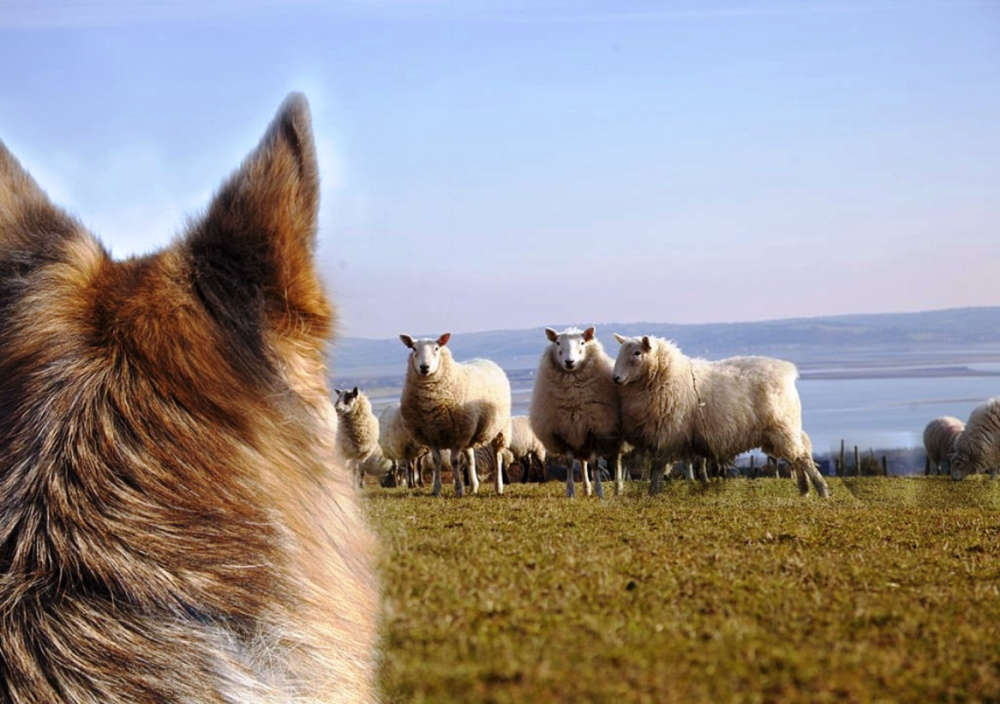
There's hardly a sheep farmer in Wicklow who hasn't been affected according to expert
Sheep farmers across County Wicklow are being urged to take part in a major UCD study into sheep worrying, after early data collected by researchers suggested the problem is far more widespread than many might assume.
Dr Locksley Messam, Lecturer in Epidemiology at the UCD School of Veterinary Medicine, is leading the research project, which is sponsored by the Department of Agriculture, Food and the Marine. Speaking to East Coast FM about the study, Dr Messam explained the objectives behind the work.
"Our plans ultimately are to, first, document the frequency that sheep worrying occurs among Wicklow sheep farmers, to get their perspectives on the problems and how we might prevent it, and then ultimately we will refer our findings to the Department of Agriculture," he said.
He added that a successful Wicklow study could pave the way for something bigger: "My hope is that when we do this, it will set the stage for a larger island-wide study on the same topic, to be able to document and to understand the frequency of sheep worrying and its impact on sheep farmers and on sheep throughout Ireland."
What exactly counts as "sheep worrying"?
For those outside farming circles, the term itself can sound almost quaint — but the reality it describes is anything but. Asked to explain it in layman's terms, Dr Messam was direct: "We define sheep worrying as any circumstance in which a dog barks at, chases, bites, otherwise causes to be injured or kills a sheep."
That definition covers a wide spectrum, from a sheep spooked by a barking dog to animals seriously injured or killed — and, as Dr Messam noted, it's a problem local Gardaí are well aware of. "Local Gardaí would tell us it is a significant problem in County Wicklow," he said, pointing to the county's high volume of sheep, particularly across its upland areas, as a key factor. "Sheep farming, particularly in the west of Ireland and in the high uplands in County Wicklow, is quite prevalent, naturally enough, and so you have high headage numbers and high numbers of sheep volumes in terms of County Wicklow."
The numbers behind the headlines
What moves this from anecdote to hard evidence is the data UCD has already gathered. Speaking with roughly 280 to 290 sheep farmers at marts and co-ops around the county, researchers found that between 15 and 20 percent had experienced sheep worrying in the last 12 months alone.
Zoom out to farmers' full careers, and the picture becomes even starker: between 80 and 90 percent have experienced sheep worrying at some point during their time as sheep farmers.
"In other words," Dr Messam said, "you would hardly be able to find a sheep farmer who has not had an incident at some time in their sheep farming career of sheep worrying." Pressed on whether the figures were as serious as they sounded, he didn't hedge: "It is indeed a very significant problem to say the least of it, and those figures are startling."
Why farmers who haven't been affected matter just as much
One of the more counterintuitive asks of the survey is for farmers who have not recently experienced sheep worrying to take part — and Dr Messam was keen to stress why that group is just as valuable to the research as those who have.
"This is a survey for both those who have experienced sheep worrying recently, and those who have not, because those who have not can provide us with information as to the circumstances under which sheep worrying does not occur," he explained. He acknowledged a natural imbalance in who tends to respond to surveys like this: "There's a tendency for persons who have recently experienced sheep worrying to participate more readily, and those who have not, I think it's not a problem. But both give us valuable information."
He made a direct appeal to that quieter group: "I'd like to make a direct appeal to those who have not experienced sheep worrying quite recently, to go online and participate, or to participate with our data collectors when they see them at the Sheep Marts."
How to take part
The survey is open to sheep farmers aged 18 and over who are resident in County Wicklow, regardless of whether they've personally experienced sheep worrying. It's anonymous, confidential, and takes roughly five to seven minutes to complete. Farmers can also speak directly with UCD's data collectors at sheep marts around the county.
Dr Messam's message to those who haven't yet taken part is simple: "The first thing that I'd like to encourage — all sheep farmers in Wicklow to participate." The relevant link and information can be found online under "Sheep Worrying in Ireland."
Findings from the study will be shared with sheep farmers, the Irish Farmers' Association, and relevant government bodies, and will feed into future prevention strategies and policy discussions — with Dr Messam hopeful the Wicklow research is just the first step toward a nationwide picture of the issue.
 Six National Finalists Revealed For New Local Hero 2026 Live Finale
 Conor Fee On Fire As An Tóchar End 31 Year Wait To Land County Football Crown
 Wicklow Hails Role Model Warren Kavanagh Who Calls Time On Successful Career
 Wicklow Councillors Split On Local Property Tax Rates
 Wicklow's Jack Reynor To Be Honoured In Los Angeles