

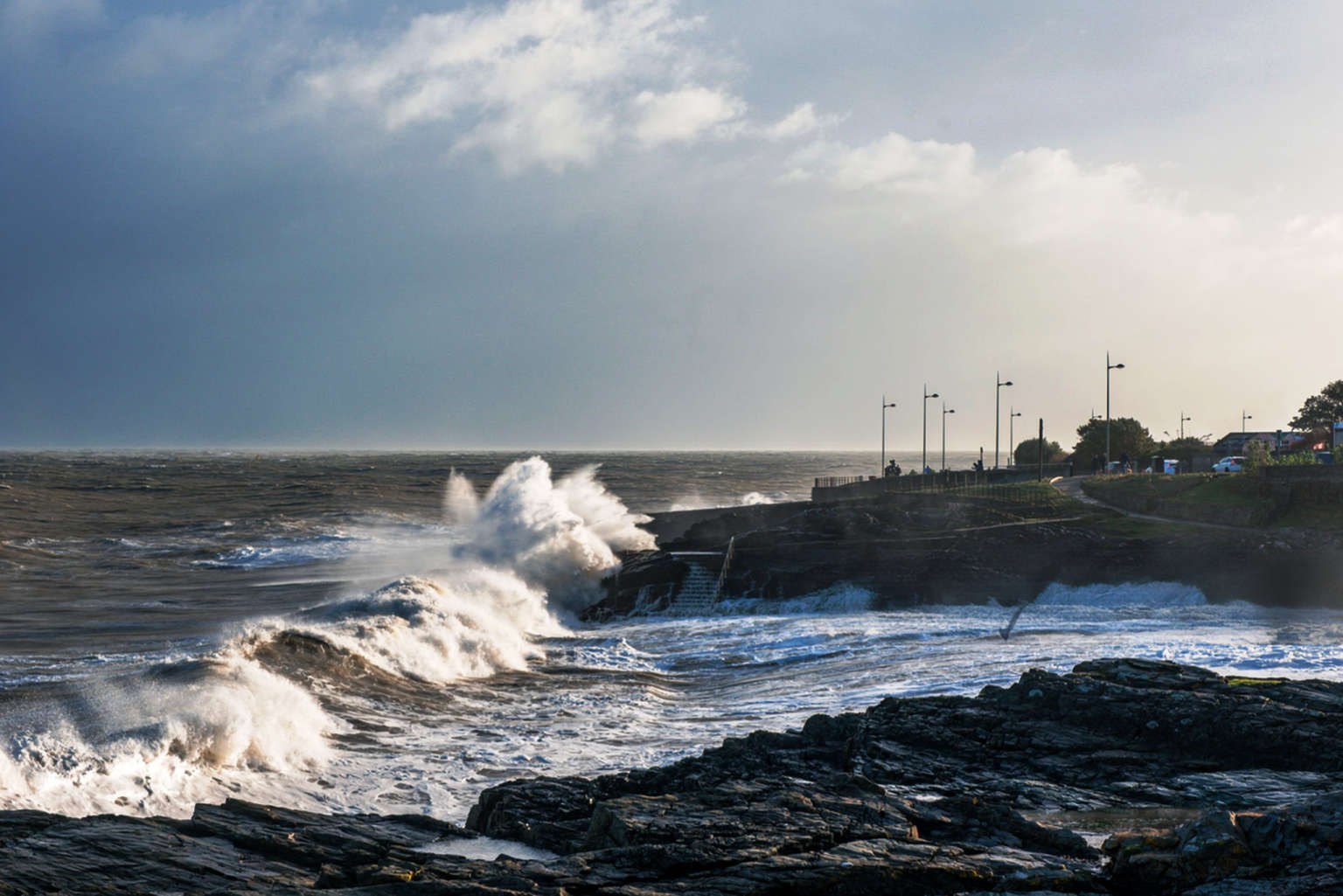
Government figures are being urged to move beyond monitoring coastal change and plan structures in place to help communities adapt
A new report has warned Ireland must begin planning for the relocation of homes, roads and key infrastructure threatened by coastal erosion and rising sea levels, with coastal counties such as Wicklow likely to face significant challenges in the years ahead.
The study, published by the University of Galway and commissioned by the Climate Change Advisory Council, says the Government must move beyond monitoring coastal change and put legal, financial and planning structures in place to help communities adapt.
Wicklow's coastline stretches for more than 60 kilometres from Bray to Arklow and includes vulnerable communities, transport links, tourism assets and amenities that are increasingly exposed to coastal erosion and extreme weather events.
Among the key findings:
-
More than 2,200 properties and 570 kilometres of roads are already identified as being at risk from coastal erosion.
-
The number of affected properties is projected to rise to 4,446 by 2050.
-
Researchers say current approaches are largely reactive, relying on emergency works and ad-hoc engineering solutions.
-
A national framework for funding, compensation and planned relocation is needed.
Lead author Dr Eugene Farrell said the debate must now move from understanding the problem to taking action.
"The core issue is accountability and action. Governments and communities cannot continue to frame today's coastal erosion crisis as an unforeseeable outcome. The science has been clear for decades, and the warnings were widely available."
He said planned relocation from vulnerable coastlines should no longer be viewed as a last resort.
"Implementing planned relocation from eroding coastlines is not optional - it is an essential responsibility of present governance."
For Wicklow, the findings are particularly relevant given the county's long coastline and the importance of coastal infrastructure, including transport routes such as the Dublin-Rosslare rail line, which has faced repeated disruption from coastal storms in recent years.
The report recommends:
-
New legislation dealing specifically with coastal change.
-
National planning and zoning guidance.
-
Improved coastal risk mapping.
-
A funding and compensation scheme for affected homeowners and businesses.
-
Greater resources for local authorities.
-
Stronger community engagement in decision-making.
 Six National Finalists Revealed For New Local Hero 2026 Live Finale
 Conor Fee On Fire As An Tóchar End 31 Year Wait To Land County Football Crown
 Wicklow Hails Role Model Warren Kavanagh Who Calls Time On Successful Career
 Wicklow Councillors Split On Local Property Tax Rates
 Wicklow's Jack Reynor To Be Honoured In Los Angeles